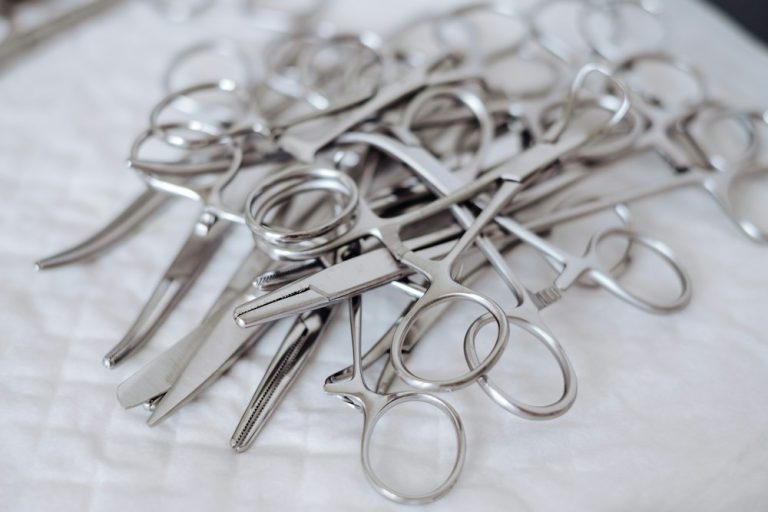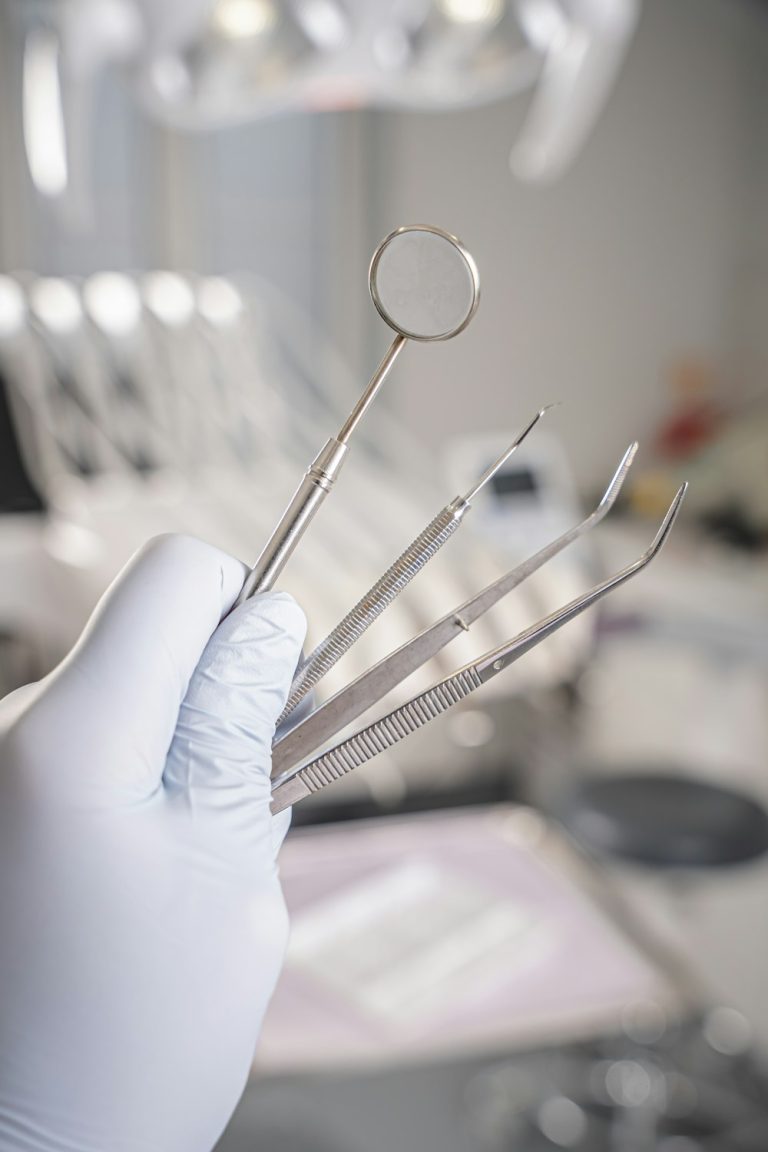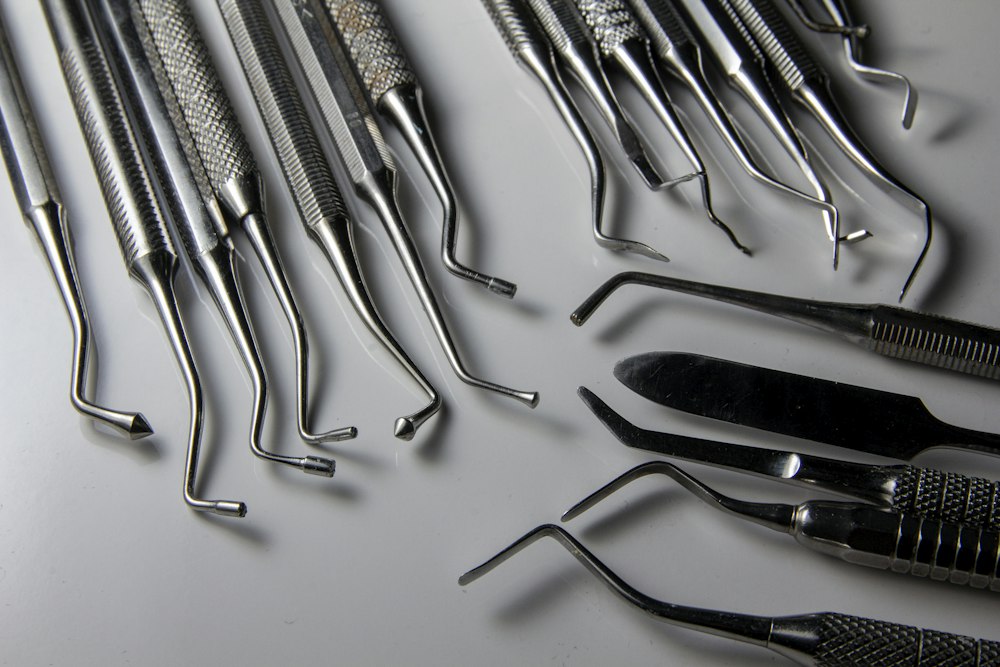
Artery forceps (haemostats) clamp vessels and tissue and lock with a ratchet, leaving the surgeon’s hands free. The basic design has barely changed in over a century, but the differences between patterns are important.
What to look at
- Jaw serrations — fully or partly serrated jaws grip tissue; finer serrations are gentler.
- Teeth — some patterns have interlocking “rat-tooth” teeth at the tip for a secure hold on tough tissue.
- Straight or curved — curved jaws improve visibility and reach around structures.
- Length — from around 125mm for superficial work to 200mm and more for deep surgery.
- Ratchet — it should engage cleanly on every tooth and hold firm without springing open.
Common patterns
Spencer Wells
The standard UK artery forceps. Transversely serrated jaws, straight or curved, typically in 127, 152, 177 and 203mm lengths. A staple of every general set.
Mosquito (Halsted)
Small, fine-tipped forceps for small vessels and delicate tissue — common in plastic, paediatric and minor surgery.
Kocher
Serrated jaws with 1×2 interlocking teeth at the tip. The teeth give a very secure grip on tough tissue such as fascia, but they also crush, so Kochers are not used on delicate structures.
Rochester-Pean
Larger, heavier forceps with fully serrated jaws for clamping larger vessels and tissue bundles.
Dunhill, Criles and others
Many other patterns vary jaw length, serration and tip shape for particular specialties — our catalogue lists each with its codes and sizes.
Checking forceps
When inspecting artery forceps, close them to the first ratchet tooth and hold them up to the light: the jaws should meet evenly along their length. Then close fully and tap the box joint gently on a hard surface — the ratchet should not spring open. Stiff joints usually mean they need lubricating with a water-soluble instrument lubricant after cleaning.
See all forceps in the catalogue.