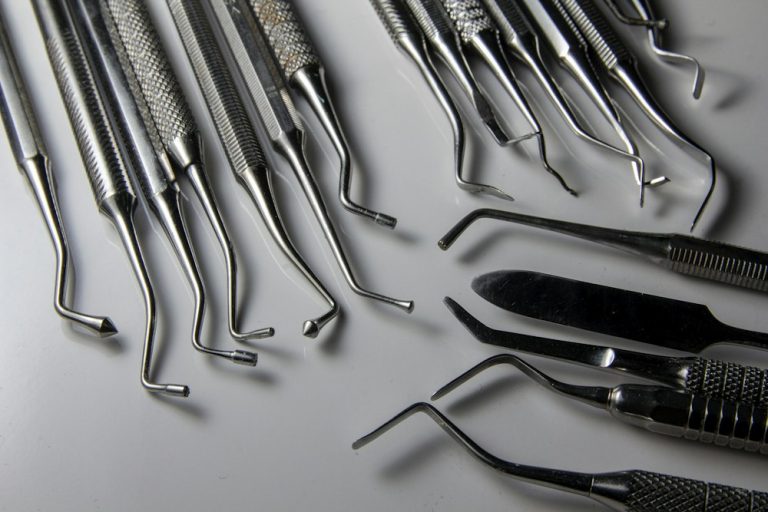
Dental extraction forceps look alike in a drawer, but each pattern is shaped for a particular jaw, side and tooth group. Knowing how to read the design makes sets easier to build and re-order.
Upper or lower?
- Upper (maxillary) forceps have handles and beaks roughly in line, or with a gentle S-bend for posterior teeth, so the clinician can work along the long axis of the tooth.
- Lower (mandibular) forceps have beaks set at about a right angle to the handles, so the forceps can reach down onto the lower arch.
Reading the beaks
- Rounded, narrow beaks grip single-rooted teeth such as incisors and canines.
- Beaks with a point on one side engage the bifurcation of a multi-rooted molar; a pattern made for one side of the mouth usually has a left and a right version.
- Fine, narrow beaks are used for roots and retained fragments.
Patterns and numbering
Many UK practices use English-pattern forceps referred to by number, while others use American patterns with different handles. Because the numbers are not universal, it is best to order by catalogue code, or send us the pattern you use now and we will match it.
Looking after them
Check that the beaks meet evenly along their length and that the joint moves smoothly without play. Clean and dry the joint thoroughly, and lubricate it with an instrument lubricant suitable for sterilisation.
See our dental range, or send us your list.